
In recent days, images of vast, dried-up reservoirs near Tehran have circulated on social media. These dams supply water to more than nine million people in the Iranian capital, and their depletion has sparked widespread concern. A combination of decades of drought, mismanagement, and crumbling infrastructure is driving Iran towards an unprecedented water crisis as the Middle East enters its warm season, experts warn.
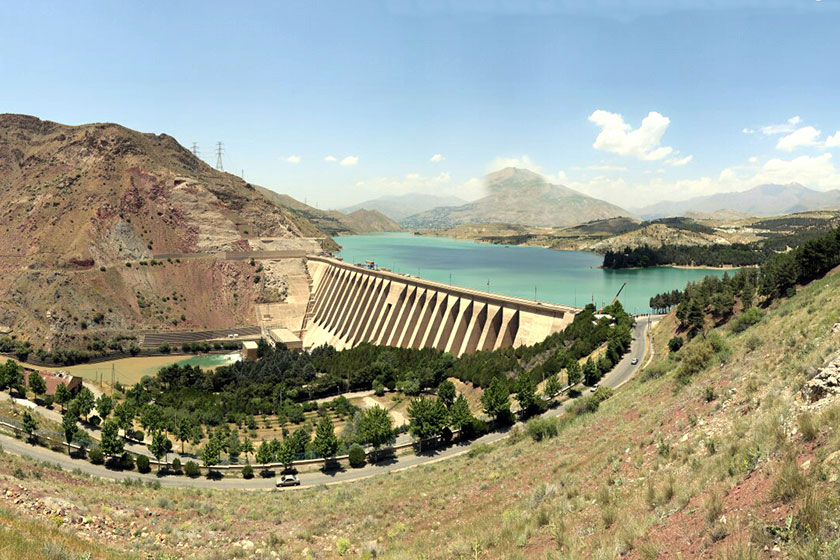
A video of the Amir Kabir Dam, 30 km northwest of Tehran, taken in August 2024 shows clear blue water reaching up into the hills. In a video from the same vantage point in March 2025, the water has disappeared, replaced by a cracked, desolate lake bed.
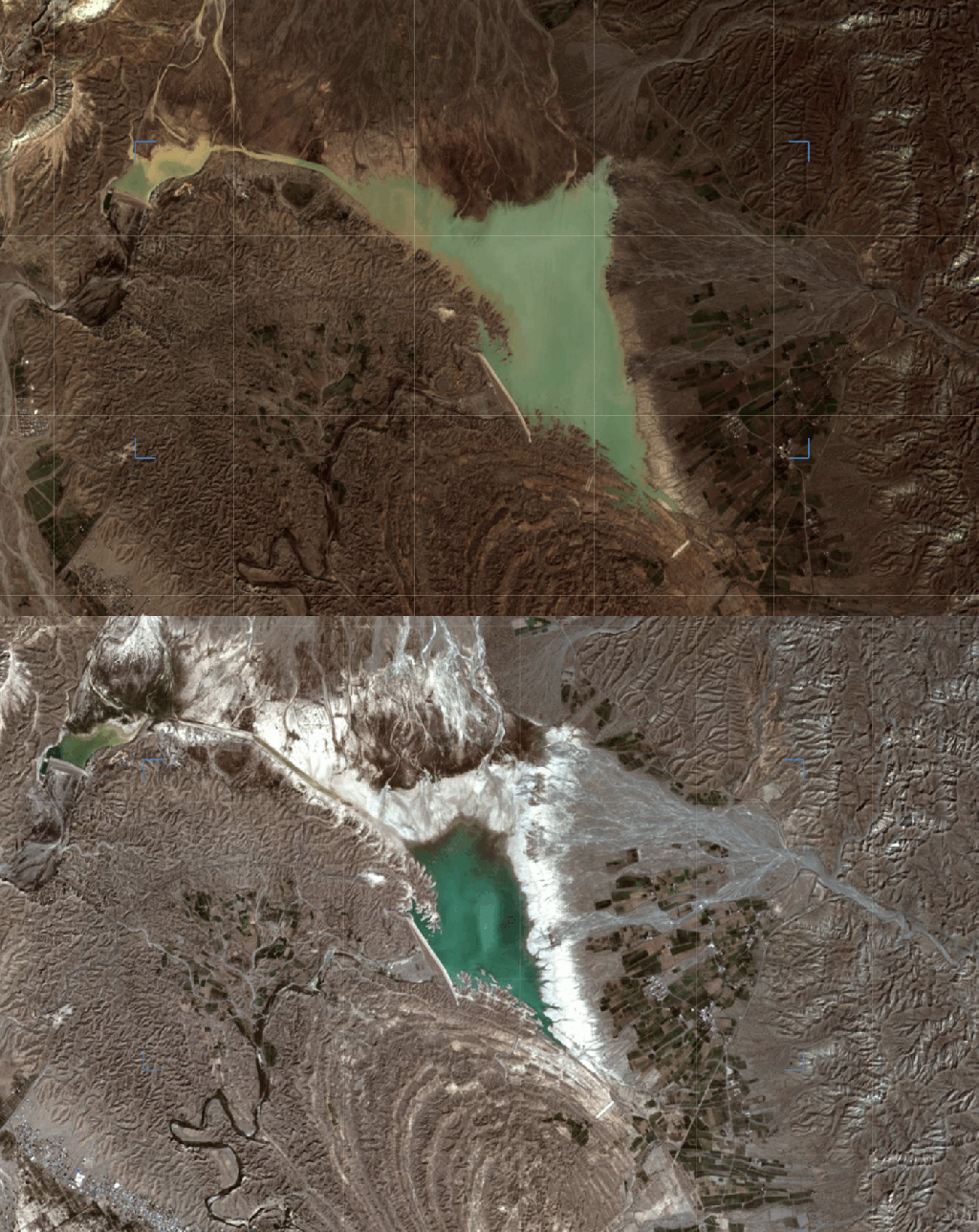
Another video being widely shared by Iranians shows a group of motorcyclists driving on the muddy bed of the Latyan Dam reservoir, 15 km northeast of the capital. “You’d be shocked if you knew this was the bed of the Latyan reservoir,” the caption reads.
Tehran is on the brink of running out of water. Authorities are preparing to introduce rationing, with daily supply cuts expected to curb consumption as shortages worsen, officials and experts say.
Seventy percent of Tehran’s water comes from five nearby dams, including Karaj and Latyan. But an unprecedented dry spell – the rainfall in Tehran since the beginning of 2025 has been the lowest recorded in 55 years – means water levels have been declining fast. State media reported on March 5 that the five reservoirs are only 13% full.
Iran has been suffering from drought for more than 40 years. Water shortages in rural areas have led to tensions between farmers and authorities they accuse of mismanaging water supplies.
‘It’s an apocalyptic situation’
Shervin [not her real name], an ecology expert in Iran, describes the worsening crisis.
If I want to describe the situation in one word, it’s ‘crisis.’ Right now, as I speak to you, we have a water outage in our house. We called the water company and they told us: ‘There’s a pressure drop in our system, so there’s a water outage in your neighbourhood.’
There’s no doubt that the authorities will have to ration water in the coming days. We’re going to have to get used to going without water for hours each day. Even the water company officials say so. But it’s like with all these kinds of things: nobody pays attention until disaster actually strikes.
In Iran, annual rainfall has decreased by 46% compared with the country’s long-term average. If you combine the capacity of the five main dams that supply Tehran, industry sources say they are only 6% full – despite the official number, 13%. Nine million people in Tehran alone, and 14 million in Tehran province, will soon have no water to drink or to meet basic hygiene needs. If we don’t have rain in the coming weeks – a lot of rain – this will take on apocalyptic proportions.
While Shervin hopes for a rainy spring, the forecasts offer little reassurance. Ahad Vazifeh, head of Iran’s Drought Crisis Management Organisation, told state media on March 9: “We don’t expect a rainy spring this year.” In another interview on March 11 he confirmed: “We will likely ration the water, and if we do not manage the situation, we will face a deep crisis in the warm season.”

An unprecedented water shortage
Shervin explains what officials mean by “managing the situation”.
The solution the state is pursuing so far is even worse than having no water. The Ministry of Energy, which oversees the country’s water management, has already applied to drill 250 deep wells in the Tehran region to extract groundwater. But the water beneath Tehran is nothing more than millions of litres of contaminated wastewater, laced with pollutants such as heavy metals – and, like any untreated wastewater, carcinogenic nitrates. This scenario would be a public health disaster.
Another solution they are considering is cutting water supplies to industry and agriculture, which will bring its own economic and social consequences.
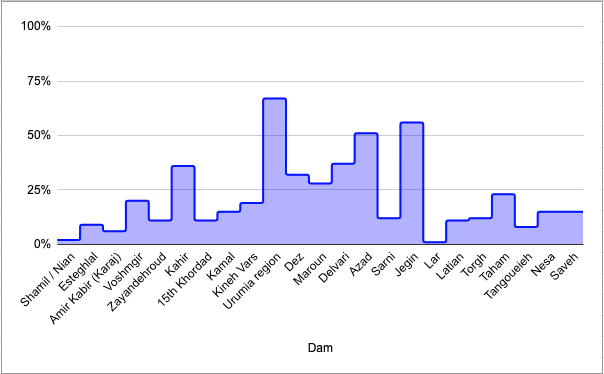
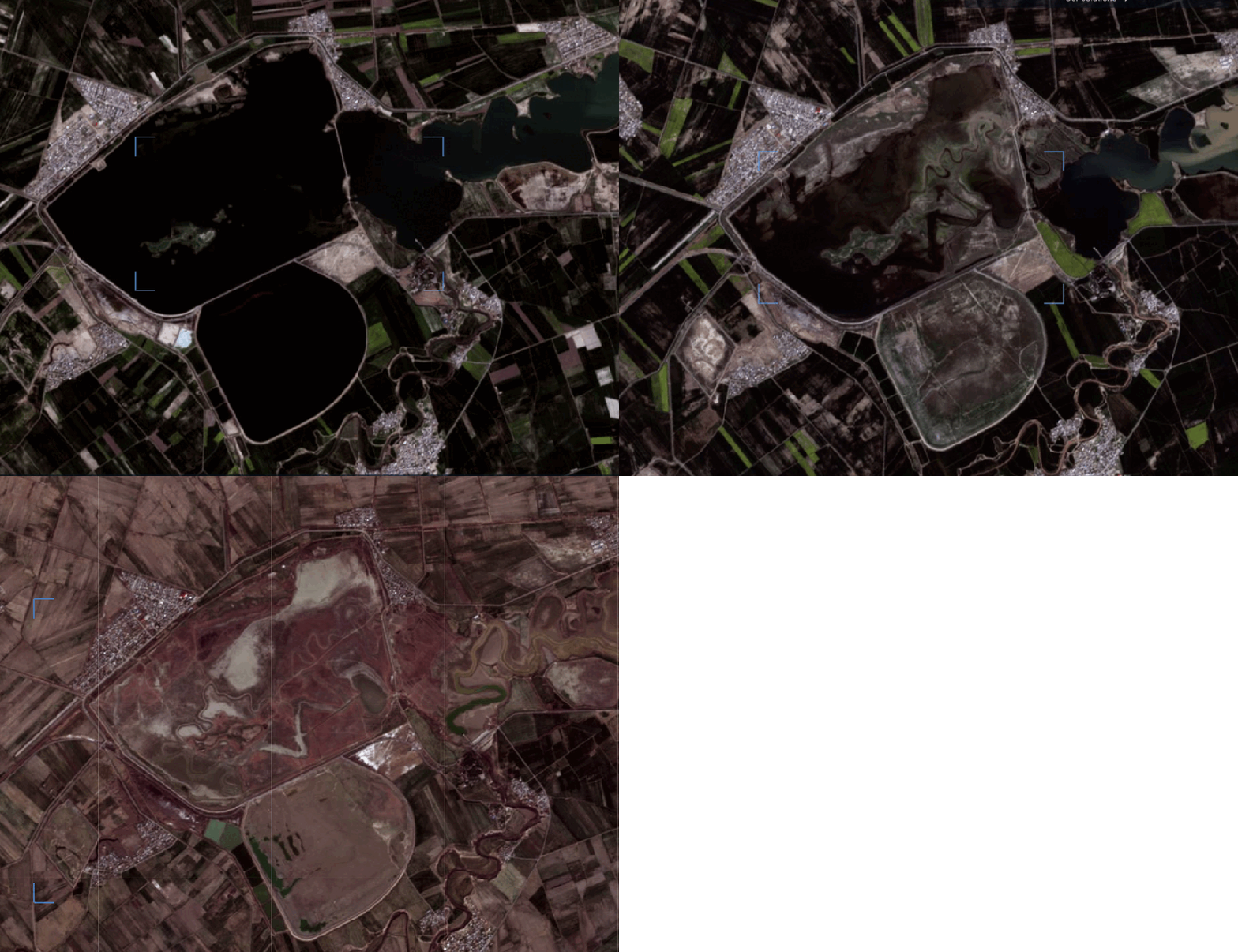
While the alarm was first raised by images shared on social media, satellite data and public records indicate that Iran is heading for a much deeper crisis in the coming months – an unprecedented water shortage not just in the capital, but nationwide.
According to official statistics, 57% of Iran’s reservoirs are empty, with some provinces seeing levels as high as 98%.
Shervin explains:
It’s a fact that Iran is experiencing a prolonged drought. In a normal year, the country receives just one-third of the global average rainfall, and this year we have had less than 45% of that. Meanwhile, consumption continues to rise due to population growth and changing usage patterns.

‘Millions of Iranians will be without water – unless there’s a miracle’
Shervin continues:
We have to factor in the broken infrastructure as well. Officially, Iran’s aging pipeline networks waste 15% of the country’s water supply, but the real figure is likely much higher.
Even in 2025, industries here still use potable water in their machinery, and outdated irrigation systems in agriculture waste enormous amounts. Meanwhile, the government continues to promote water-intensive farming in the name of ‘independence’ – a reckless policy for a country facing such an extreme water crisis.
We also lack a proper wastewater treatment system, something that is absolutely essential for a country in Iran’s position.
So with a combination of severe drought and chronic mismanagement, we are in a situation that I have no words to describe. Millions of Iranians will soon have no water for even their most basic needs – unless a miracle happens.
First published here on France24.
 Ershad Alijani