Author: Ershad Alijani

FIGRA 2025: Our Investigation on French-Made Ammunition in Iran Nominatedin Documentary Competition

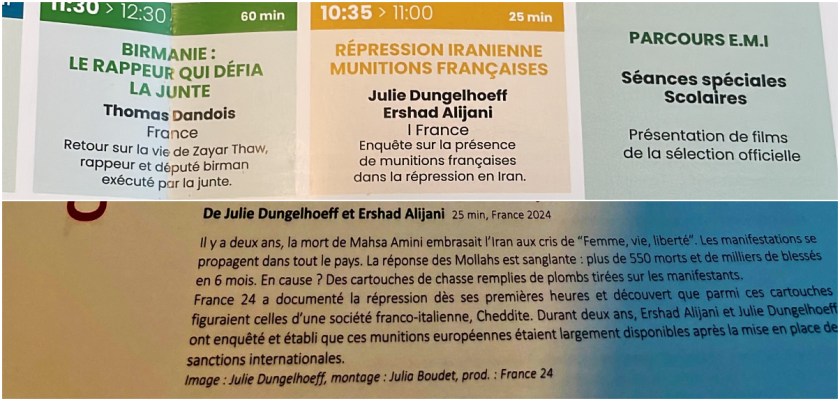
I am thrilled to announce that “Repression in Iran, Ammunition Made in France“, the investigation I conducted with my esteemed colleague Julie Dungelhoef, has been selected for the 32nd FIGRA Festival in the documentary competition (under 40 minutes). This two-year investigation uncovered how French-made shotgun shells ended up in Iran and were used against Woman, Life, Freedom protesters—despite international sanctions. Shedding light on this injustice would not have been possible without the courage of Iranians who sent us hundreds of photos and the bravery of Elaheh and Sima, two victims of shotgun fire, who shared their harrowing experiences.

‘Free Women of the Levant’: Jihadists’ families rally against al-Sharaa’s crackdown in Syria

On December 14, dozens of protesters—mostly women and children—gathered in Aleppo in northern Syria to demand the release of their relatives from the prisons of Hay’at Tahrir al-Sham (HTS). Yet the detainees are not pro-democracy activists or journalists imprisoned by the Islamist group: they are hardline jihadist fighters who rejected HTS’s increasingly pragmatic approach since the group began distancing itself from al-Qaeda and the Islamic State (IS) group. This shift began after the group’s founding in 2017 under Ahmed al-Sharaa, better known by his nom de guerre Abu Mohammed al-Jolani. The detainees call themselves “The Real Mujahideen.” Among the demonstrators were women dressed in black burqas with leaflets in hand, chanting slogans and demanding the release of their relatives while carrying their photos. They refer to themselves as the “Free Women of the Levant.” The protest marks the first anti-HTS demonstration since the group seized control of Damascus and toppled the Bashar al-Assad regime. These women make no effort to hide their disdain for Ahmed al-Sharaa, the new leader of Syria and HTS, expressing their grievances …

Repression in Iran, ammunition made in France

A two-year investigation by FRANCE 24 has revealed that hunting cartridges produced by the French-Italian ammunition manufacturer Cheddite were used in Iran during the violent crackdown on the “Woman, Life, Freedom” protests in 2022. The investigation uncovers how these cartridges are widely available in Iran, despite European sanctions imposed in 2011. It appears the ammunition may have been routed through Turkey, where Cheddite at one point held shares in a weapons manufacturing company. This investigation, broadcast by FRANCE 24, sheds light on the dealings that allowed the ammunition to reach Iranian soil, despite international sanctions. This investigation was produced by Ershad Alijani and Jullie Dungeloef. You can watch it on YouTube above and read the full story here on France24.

‘Schools are responsible’: Iran’s student suicides highlight growing tensions over its hijab laws

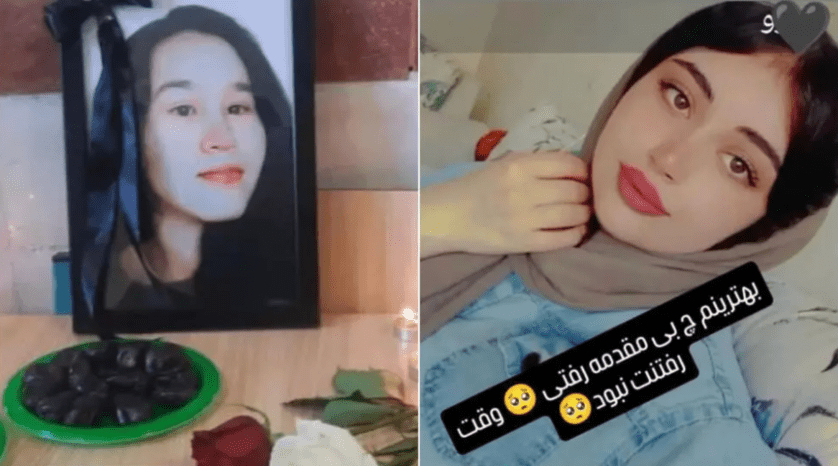
The enforcement of hijab rules in Iran is once again making tragic headlines. Over the past two weeks, two teenage girls took their own lives after reportedly facing intense pressure in their schools. Sixteen-year-old Arezou Khavari jumped from a building, and 17-year-old Ainaz Karimi hanged herself. Both were students at public schools in impoverished regions of the country. According to Iranian teachers interviewed by me, the country’s education system is structured to exert relentless pressure on students – particularly young girls – to conform to the strict dictates of Islamic Sharia law. While news of student suicides occasionally surfaces in Iranian media for various reasons, this is the first reported instance of two teenage girls taking their lives specifically due to pressure over the hijab. The incidents have sparked fresh outrage across Iranian society. On October 27, Ainaz Karimi, 17, took her own life in a village near Kazerun, in southwestern Iran. She had reportedly been insulted, humiliated in front of her classmates, and threatened with expulsion for wearing nail polish and dyeing her hair. As punishment, she was banned from attending classes …

Iranian television broadcasts barrage of misinformation to present Ronaldo as pro-Palestine

With eight textbook examples of misinformation in just two minutes, the Iranian public television channel IRIB broadcast a report on the football superstar Cristiano Ronaldo on June 15. The report made it seem like Ronaldo is a champion of the Palestinian cause, while expressing his “hatred” for Israel. But in reality, the story was rife with disinformation and crudely edited. Television programs in Iran are state-run, and most of them promote the ideology and policies of the country’s supreme leader, Ali Khamenei, who personally appoints the heads of each channel. Many Iranians, aware of the propaganda broadcast on state TV, turn to Persian channels from abroad that are available via satellite. On June 15, it was one of these state-run TV channels, IRIB, broadcast a report in Persian about Cristiano Ronaldo and his supposed support for the Palestinian cause. In the two-minute report, we counted no less than eight falsehoods… which we’ll take a closer look at in this article. Playing against Iceland, not Israel First off, the report claims that the captain of the …

Shooting of former boxing champion highlights brutality of Iran’s ‘morality police’

It all started as a citation for an improperly worn headscarf, but the incident escalated when former Iranian boxing champion Reza Moradkhani was shot four times by Iran’s “morality police” on April 28, after they questioned his wife. The incident, which left him severely injured, adds to the long list of abuses by the morality police, known for their brutal enforcement of a strict Islamic dress code. Following the altercation with the morality police, known in Iran as the Gasht-e Ershad, Reza Moradkhani, a former member of the Iranian national boxing team and boxing champion in Asia, underwent 12 hours of surgery for his injuries and is now partially paralysed. Moradkhani and his wife, Maria Arefi, also a boxer, submitted a lawsuit against the morality police officer after the shooting, saying that they were advised: “not to go public with the story”. But in June, the court dismissed their case and the couple went to the media. READ MORE: Inside Iran’s “morality police” – women use their smartphones to fight back Suddenly the officer took out …

‘Instead of rescue teams, they sent riot police’: Building collapse triggers outrage in Iran

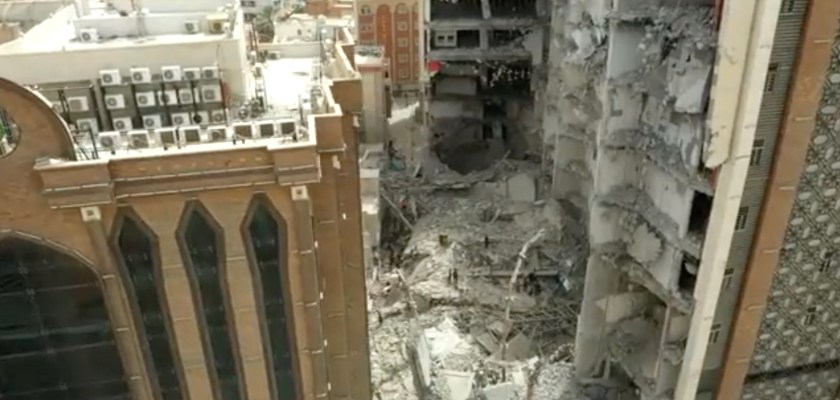
The deadly collapse of a building under construction on May 23 in Abadan, a city in Iran’s Khuzestan province, has sparked a wave of outrage in the country. At least 41 people died in the tragedy and dozens are still missing. Two weeks after the collapse, hundreds of protestors blaming the authorities for negligence and corruption are still in the streets. Iran’s Supreme Leader, Ayatollah Ali Khamenei, has called for those responsible for the tragedy to be prosecuted and punished. The regional judiciary also announced that it had arrested thirteen people, including the mayor of Abadan and two of its former mayors. The protests, however, are not letting up. Protesters accuse the owner of the 10-storey building, Hossein Abdolbaghi, a businessman close to the government, of corruption. The unrest has spread to other towns across the southwestern region of Iran. Emergency workers are still pulling bodies from the rubble. On June 6, the death toll rose to 41, Iranian officials said, but they fear that more bodies have yet to be recovered. Residents worry that …

Taliban enforces burqa for female journalists: ‘We are the last ones resisting’

On May 19, female television hosts and journalists working in Afghan broadcasting received a new order from the Taliban: “Cover your face”. Our Observer, an Afghan TV presenter, explains how she received the order and how Afghan journalists have been resisting the Taliban’s resolve to “remove women from society”. The Taliban’s Ministry for Promotion of Virtue and Prevention of Vice issued the order to female journalists around Afghanistan, to be observed from Saturday, May 21. The Taliban made it clear that “any female presenter who appeared on screen without covering her face must be given some other job or simply removed”, according to Sonia Niazi, a presenter with TOLOnews. The day after the order came in, female journalists from three privately owned media companies in Afghanistan refused to comply, going on air with their faces visible. However, on May 22, they succumbed to the directive, citing “pressure and threats from the Taliban”, wearing a burqa or mask over the bottom half of their faces. Many male journalists and TV presenters in Afghanistan began wearing black …

Afghanistan: Since the return of the burqa, women are slowly disappearing from the streets

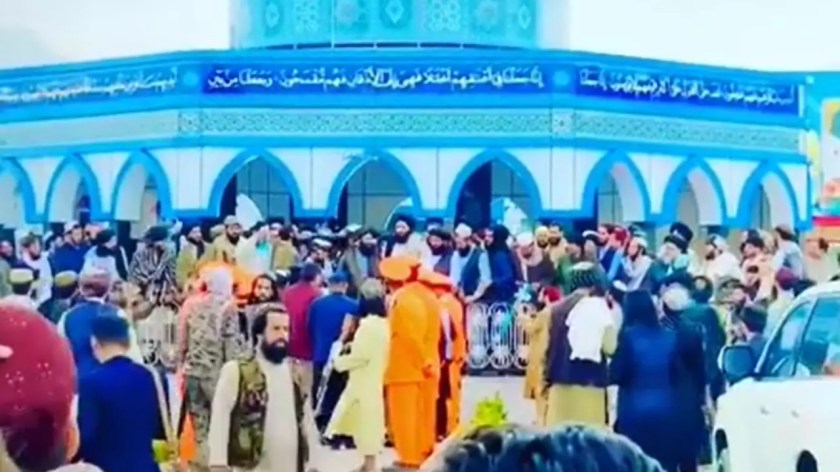
On May 7, the Taliban ordered all Afghan women to wear the full-coverage burqa in public places. Since the decree was put in place, the difference in Afghanistan’s streets is visible. Or rather it’s invisible: women have all but deserted public streets to remain cloistered in their homes. Although our Observer dared to leave home to protest with other women’s rights activists on May 10, she has no illusions about the future that awaits her. “Those women who are not too old or young must cover their face, except the eyes, as per sharia directives, in order to avoid provocation when meeting men who are not mahram (adult close male relatives),” says the decree, which came into force on May 7, announced by Taliban leader, Hibatullah Akhundzada. The images of daily life in Kabul, Herat or Mazar-e Sharif on social media show that the order has been followed: women seem to be absent from the streets, markets and parks. Akhundzada specified the consequences for breaking this decree on May 6: “First, the woman wearing immoral …

Iran’s failed Covid-19 vaccination campaign due to ‘political power struggle’

Iran’s Covid-19 vaccination campaign has been rife with complications: videos shared online show queues up to a hundred metres long as people wait for hours to be vaccinated, with doses sometimes running out long before everyone receives their jab. Others show thousands of people rushing to the border with Armenia in search of a dose. According to our Observer, an Iranian doctor, these predicaments are the result of political rivalries and the failure of Iran’s vaccine strategy. In Iran, a country of 82 million people, only 4.7 million people have received their first dose of the Covid-19 vaccine, while just 2.2 million are fully vaccinated. So far, people 60 years of age and older are the only ones eligible for vaccination. Videos shared online show elderly men and women waiting in line for hours before they can get vaccinated. Many others – mostly young, middle-class Iranians who are not yet eligible for vaccination and don’t expect to receive their vaccines in Iran anytime soon – have found their solution abroad, either in Dubai or Armenia, …