The Russian Ministry of Defence has tried very hard to prove that the United States is collaborating with the so-called Islamic State by publishing fake images Read More
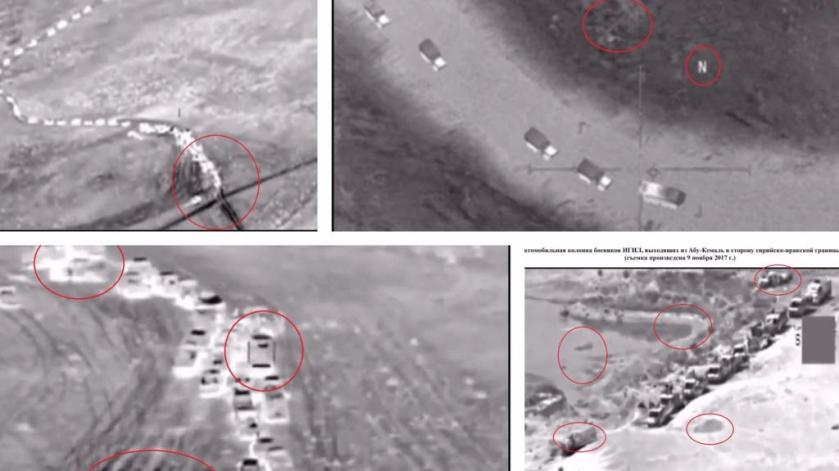
The Russian Ministry of Defence has tried very hard to prove that the United States is collaborating with the so-called Islamic State by publishing fake images Read More
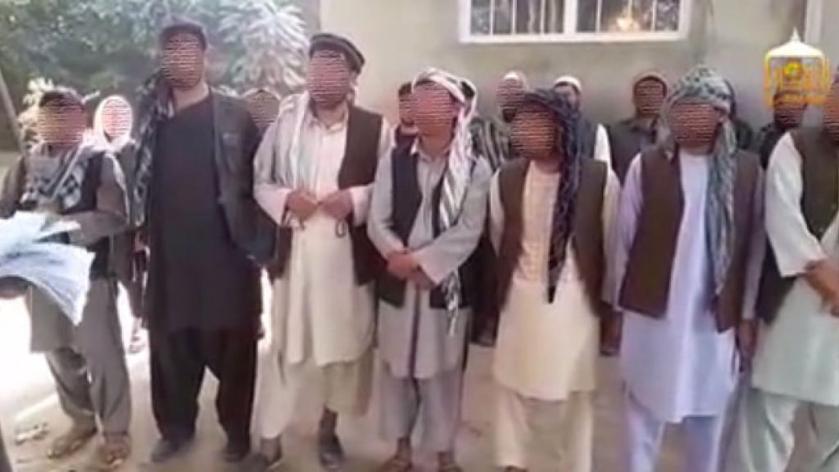
The Taliban has published a propaganda video in which they claimed that 77 members of the Afghan security forces had defected and joined their ranks. The video, which included footage of the purported recruits, Read More

Once part of Iran’s underground scene, several female Iranian singers have become more daring of late. They’ve shrugged off their headscarves, Read More

A lot of Iranians — especially Iranian women — were outraged at the double standards demonstrated by the organisers of the 2018 World Cup qualifying match Read More

Censors at Iran’s Ministry of Culture and Islamic Guidance often order directors to make changes to their films – or ban the films outright. Read More

The Iranian film industry is one of the most respected in the world and wins dozens of international prizes each year. However, before they are released, films produced in Iran must go in front of the state censorship board. I spoke with Iranian director Abdolreza Kahani to find out the real deal about making movies in a theocracy.
I’m going to publish a two-part interview about censorship and Iranian cinema. Stay tuned for part two.
How does censorship work in Iran? In the past decade, at least 25 films have been banned in Iran, for a variety of reasons.
The film “Asabani Nistam” (“I’m not angry”, in English) by director Reza Dormishian was banned in 2014 because the story centres on the Green movement, an opposition movement that came to prominence in 2009. The films “Mehmoonie Kami” (“Kami’s Party”) by director Ali Ahmadzadeh and “Delighted” by Abdolreza Kahani, which are both about social tension in Iran, were also banned.
“To get authorisation to film in Iran, you need to go through several steps”
However, it’s not just overtly political films that are affected by censorship in Iran. In reality, censors scrutinise the whole industry– down to even the tiniest elements of a scene or screenplay. It’s a complex system, but director Abdolreza Kahani — who has won numerous international prizes — has dealt with it enough to know the ropes. Some of his films have been either partially or completely banned by the board.
Abdolreza Kahani:
“There are multiple steps to getting authorisation to film in Iran. First, you have to submit a complete screenplay to the examination commission at the Ministry of Culture and Islamic Guidance. The members of this commission read the screenplay to check that there is nothing that is overtly problematic in it. If there is a “problem”, they request modifications to the text or just delete the section themselves. They can also decide to throw out the entire screenplay.
Once we get this initial authorisation, then we can start filming. When we finish up the filming, another commission examines the film to make sure that we respected all regulations and that what we made follows the screenplay that we submitted. They can censor different scenes or ask us to modify them. If it is approved, then the commission gives us the authorisation to screen it.
A lot of films are banned at this step, including my film, “Delighted” — even though the finished film was even more conservative than the screenplay that had been originally approved.”
Initially published on France24 on 08/18/2017
Read the full story here.
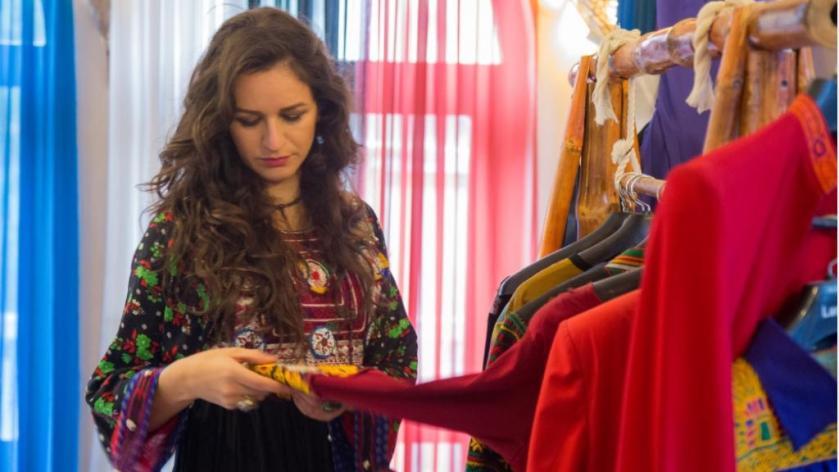
For many people, fashion in Afghanistan means women in burqas and men with full-length beards, not dynamic young fashion designers. Read More
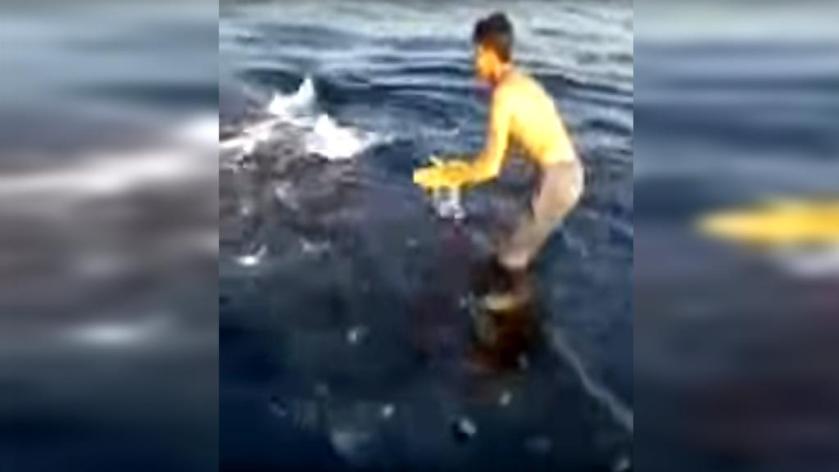
An Iranian fisherman created a scandal when he shared footage of himself riding on the back of a whale shark in the open waters of the Persian Gulf in early July. Read More

His name is Abou Azrael, but he’s better known as “Iraq’s Rambo” — the muscle-bound symbol of the fight against the Islamic State group in Iraq. Read More

With black chadors over their uniforms, officers of Iran’s “guidance patrols” are a scourge for Iranian women who want to wear bright colours and push the limits of the Islamic Republic’s dress code. But some Iranian women are fighting back, using their smartphones to document what happens once they are arrested.
The Gasht-e-Ershad (guidance patrol) is Iran’s morality police. Part of the regular police force, its male and female officers are charged with enforcing Islamic codes in Iranian society, and have the power to arrest people they think are violating them. While the total number of its officers is unknown, a spokesman said the force made 207,000 arrests between March 2013 and March 2014, and notified a total of 2 million women that their hijab (Islamic dress) was not correct.
Under Iran’s Islamic law, women are supposed to cover everything except their face and hands. Conservative women wear the chador – a black garment that covers the head and goes down to the ankles. But other women choose to wear a scarf that covers their hair, a knee-length “manteau”, or coat, with sleeves to the wrist, and a skirt or trousers.
In recent weeks, a series of videos has emerged on social media showing what happens when women are arrested by the morality police. Many of the videos – filmed surreptitiously inside the patrols’ white and green vans, and inside police stations where women are questioned – have been posted to a Facebook page called “My Stealthy Freedom”.
Initially published on France24 on 05/24/2017
Read the full story here.
 Ershad Alijani